
Terracotta Army: A Feat of Art & Engineering
Copy by Aaron Gordon, Regent Seven Seas Cruises
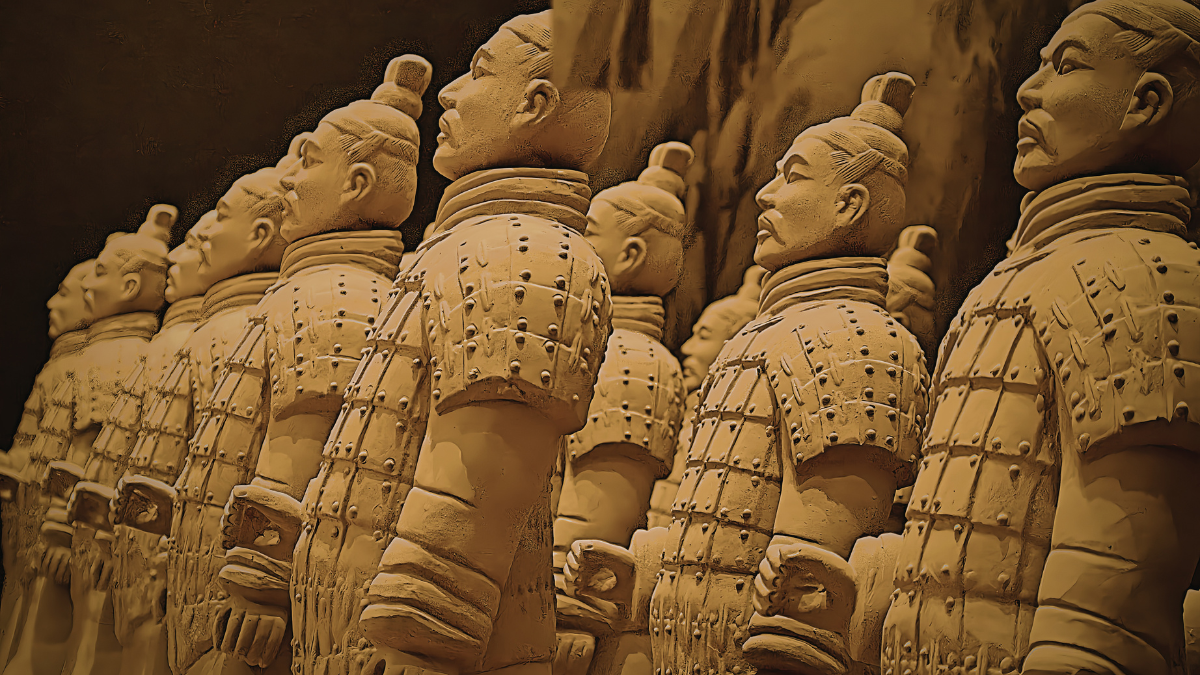
As someone who travels the world for a living, Aaron Gordon offers a deeply personal perspective on one of China’s most extraordinary sites. In this piece, he brings readers inside the awe-inspiring scale and quiet power of the Terracotta Army, revealing both its artistry and its enduring mystery. What unfolds is not just a visit, but an intimate encounter with one of history’s greatest feats of engineering and imagination.
An All-Access Pass to China’s Past
As someone who travels the world for a living, I’ve seen my fair share of iconic landmarks, but nothing quite prepares you for this encounter.
What struck me first wasn’t the soldiers, but the setting itself. The drive to the site took us through the quiet countryside, a landscape that has remained unchanged for centuries. I couldn’t help but think of the farmers who, while digging a well, stumbled upon the burial place of Emperor Qin, uncovering life-size pottery heads. What would’ve been their well is now a cutting-edge complex that seems almost out of place in the bucolic setting, until you’re inside and realize that it is essential to use modernity to protect the ancient.

Standing at Attention
The moment I stepped into the first pit, which could better be described as a massive airplane hangar, it took my breath away. Row upon row of clay soldiers standing in formation for as far as the eye can see. And this is what we’re able to see on display; thousands more of them remain buried. You can’t really grasp the scale of it all in a photograph, or the silence. After all, it is the entrance of a tomb, so there’s a solemn feeling that looms over them.
Each warrior is life-sized, and no two are the same. They have different hairstyles, facial features, and expressions. Some still bear faint traces of paint. Researchers have found that they used bright colors, like reds, greens, and purples, which matched the fabrics worn by the real Qin soldiers.
During excavations, something like 40,000 bronze weapons, including battle axes, crossbows, and arrowheads, were found nearly intact, revealing the sophistication of ancient Chinese craftsmanship.
Meaning Behind the Formation
Soon after ascending the throne at the young age of 13, Emperor Qin commissioned his mausoleum and the soldiers to guard him in the afterlife. The entire complex was designed with military formation. The army faces east, toward what would’ve been the direction of the emperor’s enemies. Historians now believe that some 700,000 workers worked for nearly four decades on the mausoleum. Across three pits, archaeologists have uncovered approximately 8,000 terracotta soldiers, along with numerous horses and chariots, a pyramid mound marking the emperor’s tomb, remains of a palace, offices, store houses and stables. A fourth pit remained empty, suggesting that the burial pit was left unfinished at the time the emperor died.
Scale & Detail
While cruising China, you have the opportunity to visit large monuments, from The Great Wall to the Forbidden City. The Terracotta Army is different. It impresses not only because there are thousands of figures, but because every single one was crafted with such detail and care by conscripted laborers. People who likely never saw the emperor whose tomb they were building, and many who lost their life in the process. It’s interesting because even though they are housed and protected in a modern facility, China’s history is right in front of you, staring back at you in clay.

Tips for Your Journey to Xi'an's Terracotta Army
Travel Tip #1: How to Get to the Excavation Site
Step into the pages of history with effortless comfort before or after your voyage on the Terracotta Warriors Land Program . From Hong Kong, you’ll jet off to Xi’an, the ancient heartbeat of China and capital of the Shaanxi Province. From the moment you arrive, everything is taken care of: transfers, hotels, meals and an itinerary that reads like a historian’s dream.
Travel Tip #2: What to Wear to Visit the Terracotta Warriors site
Even in warmer months, the excavation pits are underground and can feel cool, especially Pit 1, which is the largest and most impressive. While the site isn’t huge, there’s a bit of walking between pits and the entrance area, so comfortable shoes are a must.
Travel Tip #3: Wheelchair Accessibility at the Terracotta Warriors site
The Terracotta Warriors site is wheelchair-friendly, featuring barrier-free access. Wheelchair rentals are available and can be booked from the parking lot.
Travel Tip #4: Exhibition Halls on Emperor Quin's Reign
Aside from the excavation sites, there is a separate building within the archeological park that displays smaller excavated artifacts, including weapons, coins, tools, and ceremonial items. There you can also see multimedia exhibits on Emperor Quin’s reign and ongoing excavation techniques.
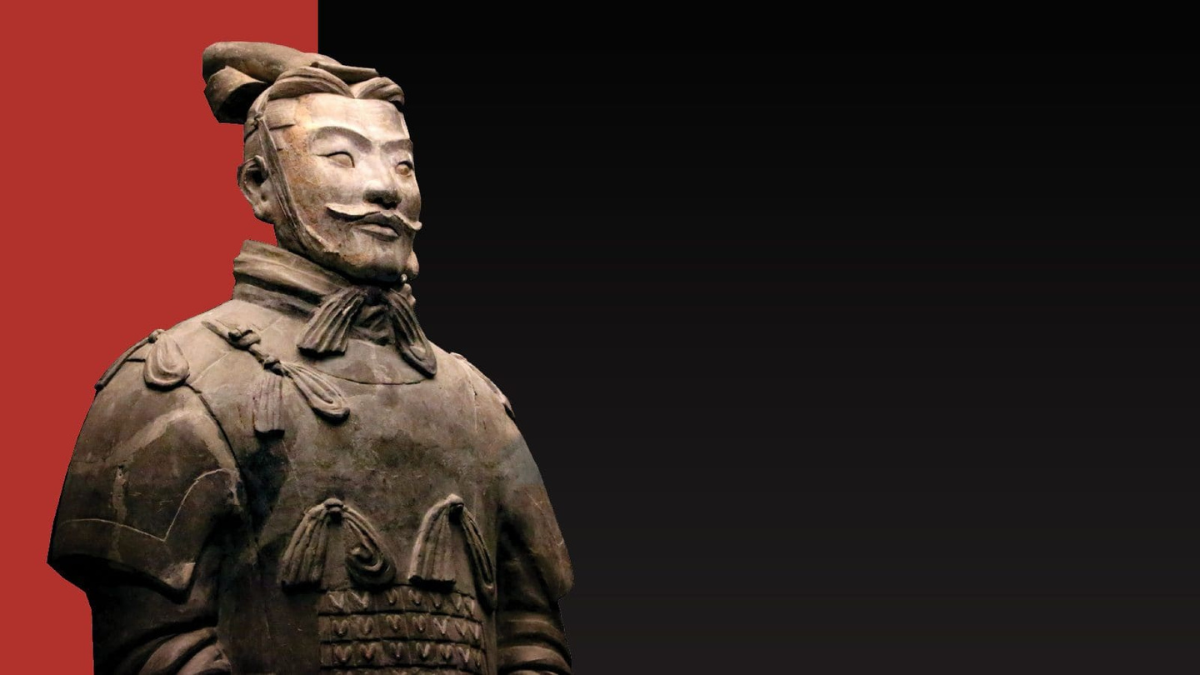
Photo credit: Houston Museum of Natural Science
Enjoy a New Look at the Terracotta Warriors at the Houston Museum of Natural Science
In partnership with cultural institutions dedicated to preserving and sharing the world’s great histories, Regent Seven Seas Cruises® is proud to support World of the Terracotta Warriors: New Archaeological Discoveries in Shaanxi in the 21st Century, now on view at the Houston Museum of Natural Science. This landmark exhibition marks a new chapter in the global story of the Terracotta Warriors, presenting more than 110 newly unearthed artifacts — many appearing in North America for the first time — and offering a deeper, more expansive look at the civilizations that shaped ancient China.
While the life-size warriors of Emperor Qin Shi Huang remain the exhibition’s unforgettable centerpiece, this immersive experience reaches far beyond the famous army. Rare jades, bronze ritual vessels, gold ornaments, and ceremonial objects trace over two millennia of political, artistic and technological achievement across Shaanxi Province. From the ancient walled city of Shimao to the height of the Qin dynasty, the exhibition reveals a living narrative of kingdoms rising and falling, craftsmanship evolving and an emperor whose silent guardians still stand watch.